
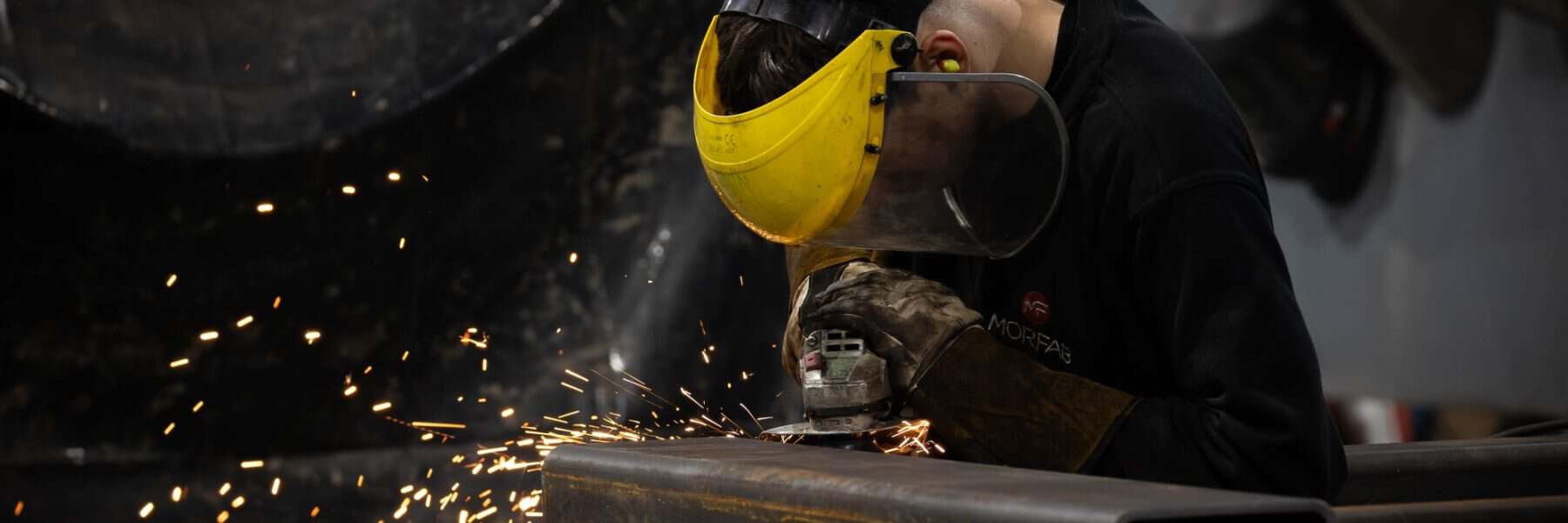
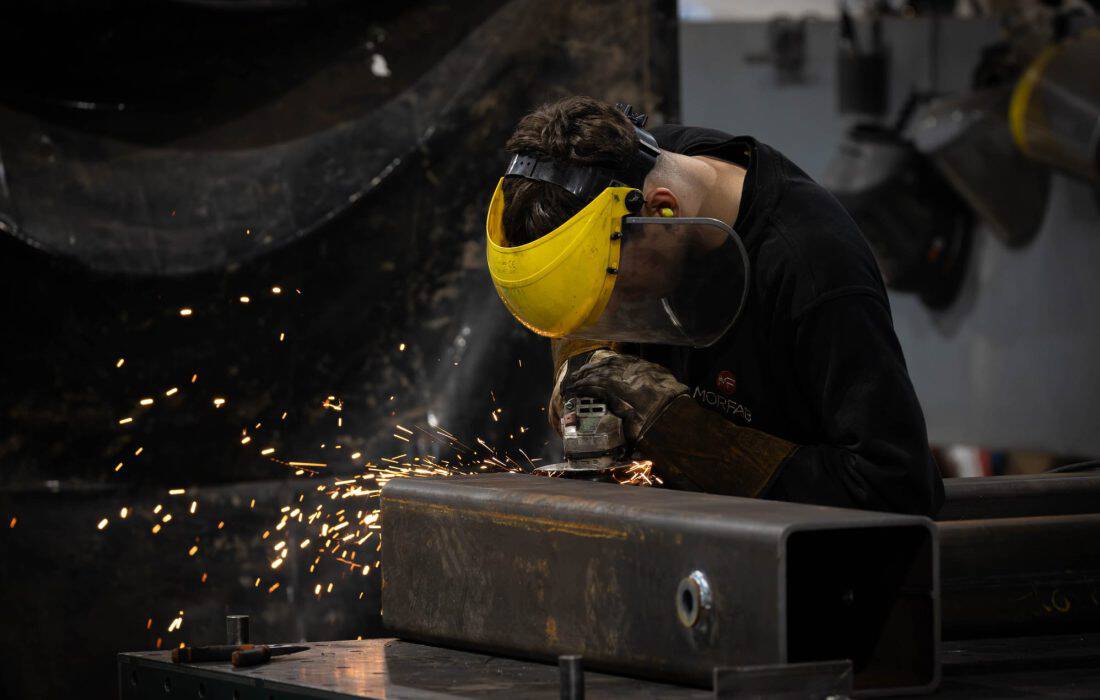
A skid is a steel base frame that carries equipment so it can be built, tested, lifted and installed as one unit. Pumps, compressors, generators, filtration, hydraulic power units, control panels, battery and transformer packages. We fabricate skids and base frames up to 10 tonnes at our works in Washington, between Newcastle and Sunderland, with overhead cranes throughout the shop. This is what we think about when we build one, and what buyers should be asking any fabricator quoting skid fabrication.
Why skids?
Building equipment on a skid moves work off site and into a workshop. The package gets assembled, piped, wired and often function-tested before it ships. On site, it’s lifted onto prepared foundations and hooked up. That’s less time working at height or in bad weather, fewer trades on site and a known, tested unit arriving at the gate.
We see them across industrial plant, process, energy and offshore wind support work, where packages go onto quaysides, substations and vessels.
Design considerations
Lifting points
Padeyes and lifting lugs need proper engineering, not just a plate with a hole in it. Their position sets how the skid hangs, so the lift points should be arranged around the centre of gravity of the loaded skid, not the empty frame. Weld sizes, plate thickness, hole diameter to suit the shackle pin, and out-of-plane loading from sling angles all need checking.
On the regulations: HSE’s guidance on LOLER (L113, Safe use of lifting equipment) treats lifting points permanently fixed to a load as part of the load, not lifting equipment. That doesn’t let anyone off. The same guidance says lifting points must be of adequate strength for the job, and that their strength should be tested where the risk justifies it, particularly where lugs are welded on. In practice, most clients specify a proof load test and NDT on the padeye welds, and offshore packages are often designed to DNV-ST-E273 (portable offshore units) or a client spec. Tell us the standard at enquiry and we’ll build and test to it, using third-party testing and NDT where needed.
Stiffness and deflection
Rotating equipment is fussy about its base. A frame that’s strong enough can still flex enough to throw a pump and motor out of alignment, or to crack pipework during a lift. Deflection limits should come from the equipment supplier or your engineer, and they often drive the section size more than strength does. Machined mounting pads or packing allowances are worth specifying early.
Drainage
Skids that collect water rust from the inside. Drip trays need falls and drain points, and closed sections should be sealed or drained. Where a bunded skid holds oil or chemicals, the bund capacity and drain valve position belong on the drawing.
Access and maintenance
Someone has to service the kit. Think about walkway width, grating, handrails, removable panels, forklift pockets and where the cable and pipe entries land. It’s far cheaper to move a cross member on a drawing than in a finished frame.
Our design engineering team works in-house CAD and can develop fabrication drawings from your GA or equipment layout.
Materials
Most skids are carbon steel structural sections and plate, S275 or S355, with chequer plate or grating for decks. Stainless is used for wet, hygienic or corrosive duties, and for drip trays or pipe supports on some process packages. Our welding procedures cover base materials up to and including S690 if a high-strength steel is specified. Every batch comes with mill certificates and traceable records.
Welding quality
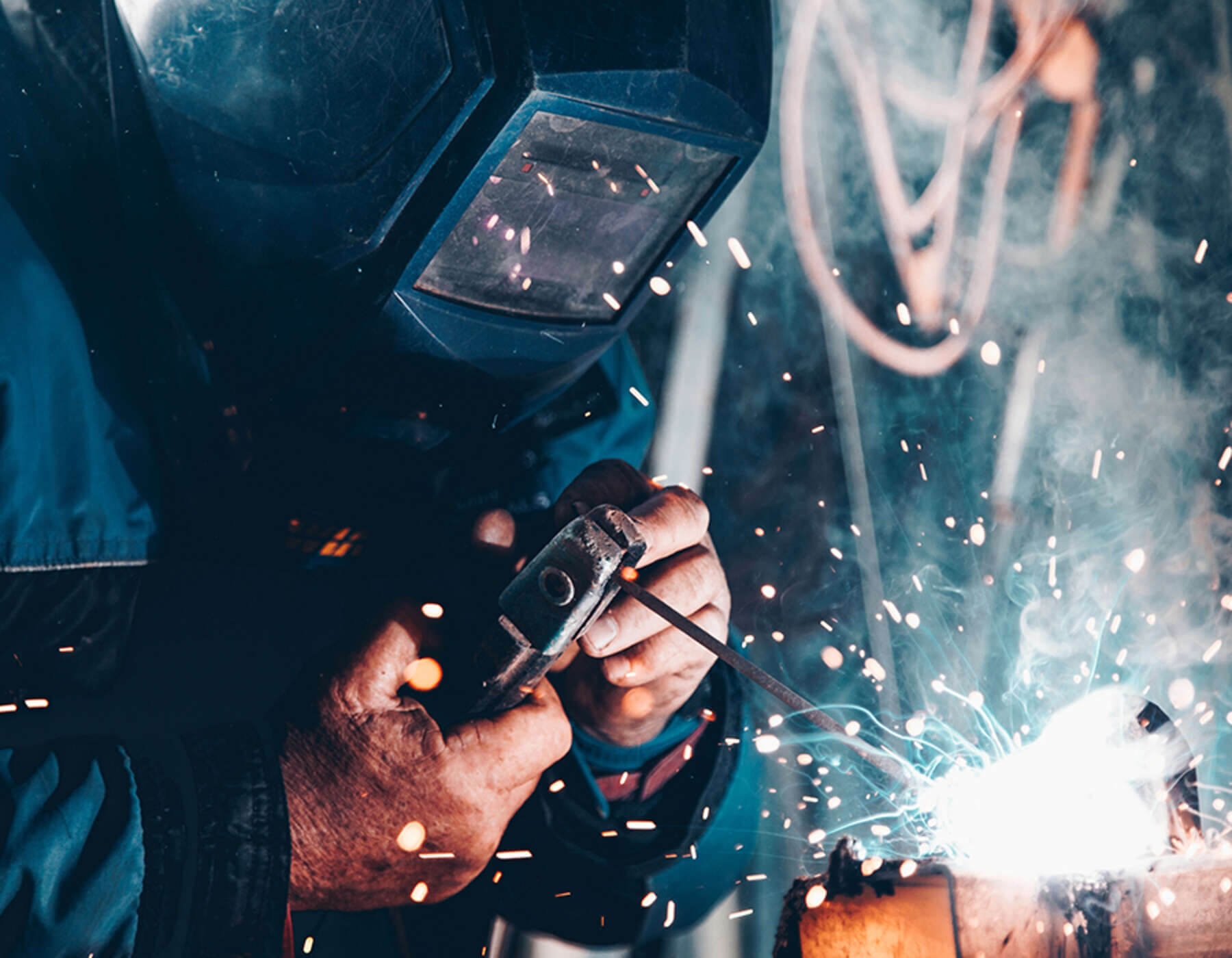
Skids are welded structures carrying expensive equipment, so weld quality matters. We work to BS EN ISO 3834-2, the comprehensive level of quality requirements for fusion welding, with a responsible welding coordinator on site. Our welders are coded to BS EN ISO 9606-1, working to WPQRs qualified to BS EN ISO 15614-1, using MAG (135), flux-cored (136) and metal-cored (138) processes.
Visual inspection is to BS EN ISO 5817. Where your spec calls for MPI, UT or other NDT, we arrange it through independent third parties.
EN 1090: be clear on execution class
Our Factory Production Control is certified to BS EN 1090-1 and -2 at EXC2. That covers the large majority of structural steelwork, and most skids and base frames fall into it. Some offshore and high-consequence specs call for EXC3 or EXC4. We’re not certified to those, so if your spec says EXC3, tell us at enquiry and we’ll be straight with you about whether we’re the right fit.
See our accreditations for the certificates.
Traceability and data books
Most skid buyers want a data book (manufacturing record book) at handover. Typically that includes:
- Material certificates for plate and sections, cross-referenced to the parts they went into
- WPS and WPQR references, and welder qualification certificates
- Visual and NDT inspection reports
- Dimensional checks
- Coating records, such as DFT readings
- Lifting point test certificates where applicable
Agree the content at order stage. Pulling traceability together after the fact is painful for everyone.
Coating
We powder coat in-house. Our oven is 8m long, 3.5m high and 3m wide, so most skids and base frames go through in one piece. We coat to specifications including ISO 12944 and BS EN 13438, in any of 213 RAL Classic colours. More detail on our powder coating page.
Where hot-dip galvanising is specified, we arrange it through a galvaniser and design the frame with vent and drain holes to suit. If your spec calls for a liquid paint system, flag it at enquiry so we can tell you how we’d handle it.
Offshore wind and energy work
A lot of the skid work coming through the North East now is energy related, including offshore wind support equipment going out of the Tyne and Teesside. We’ve written more about that in our post on offshore and subsea fabrication in the North East.
Delivery
From Washington we’re well placed for the Tyne, Wear and Tees ports, and we deliver to sites across the UK. We can arrange transport and site installation through our dispatch and assembly service.
FAQ
What is a skid in fabrication?
A steel base frame that equipment is mounted on so the whole package can be built, tested, lifted and installed as a single unit.
Do skid lifting points need load testing?
HSE guidance under LOLER says lifting points on a load must be strong enough for the lift and should be tested where the risk justifies it, especially welded lugs. Most clients and offshore standards require a proof load test, so it’s usually in the spec.
What’s the largest skid MorFab can build?
Up to 10 tonnes, lifted with our overhead cranes. Coating size is limited by our 8m × 3.5m × 3m oven.
Can you supply a data book?
Yes. Material certificates, welding records, inspection reports and coating records can all be compiled into a data book. Tell us what you need at order stage.
What execution class do you fabricate to?
We’re certified to BS EN 1090 EXC2. That covers most skids and base frames. We aren’t certified for EXC3 or EXC4.
Talk to us
Got a skid or base frame to price? Send over the GA, equipment weights and your spec, and we’ll come back with a price and lead time. Contact us or call 0191 816 2718.