
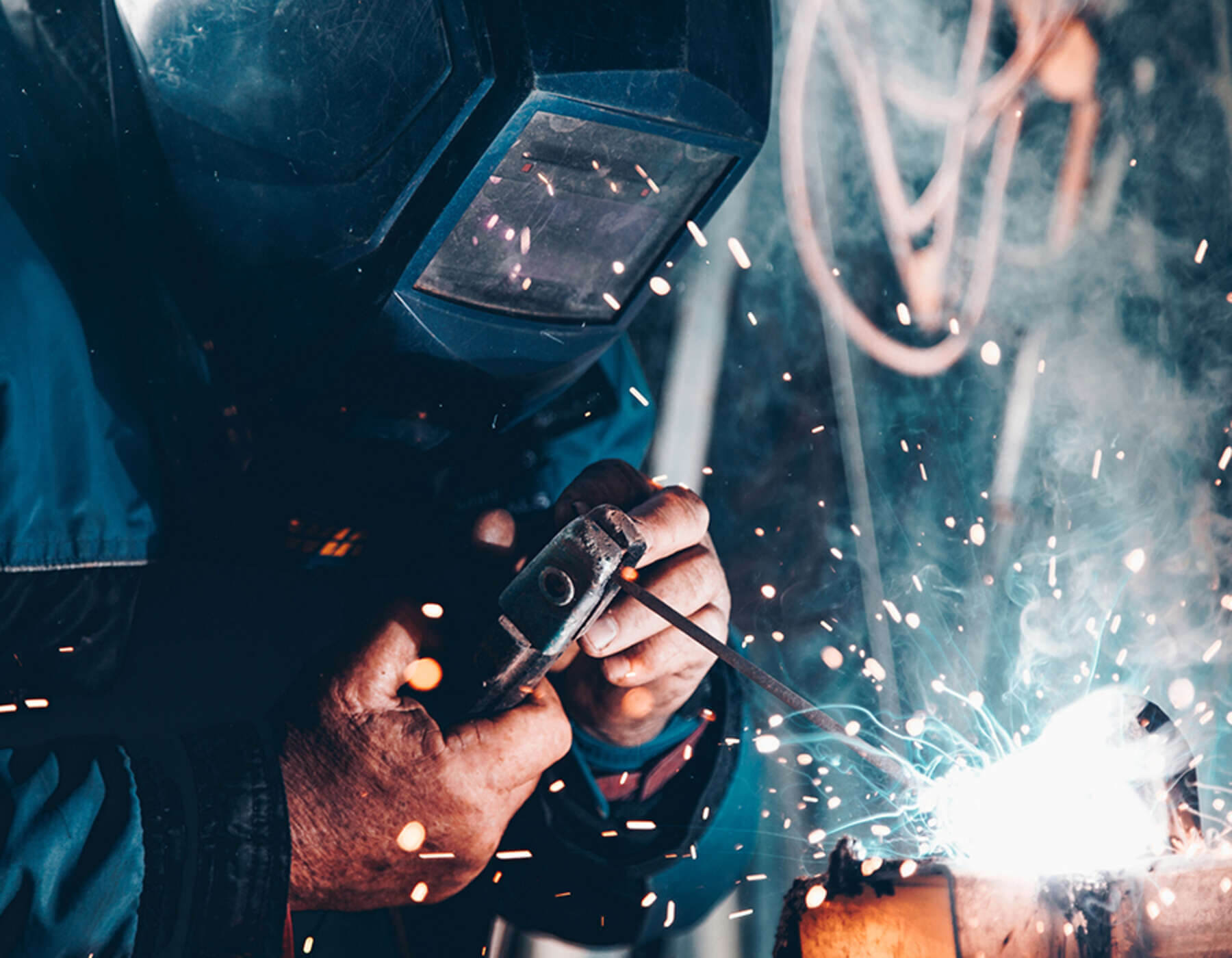
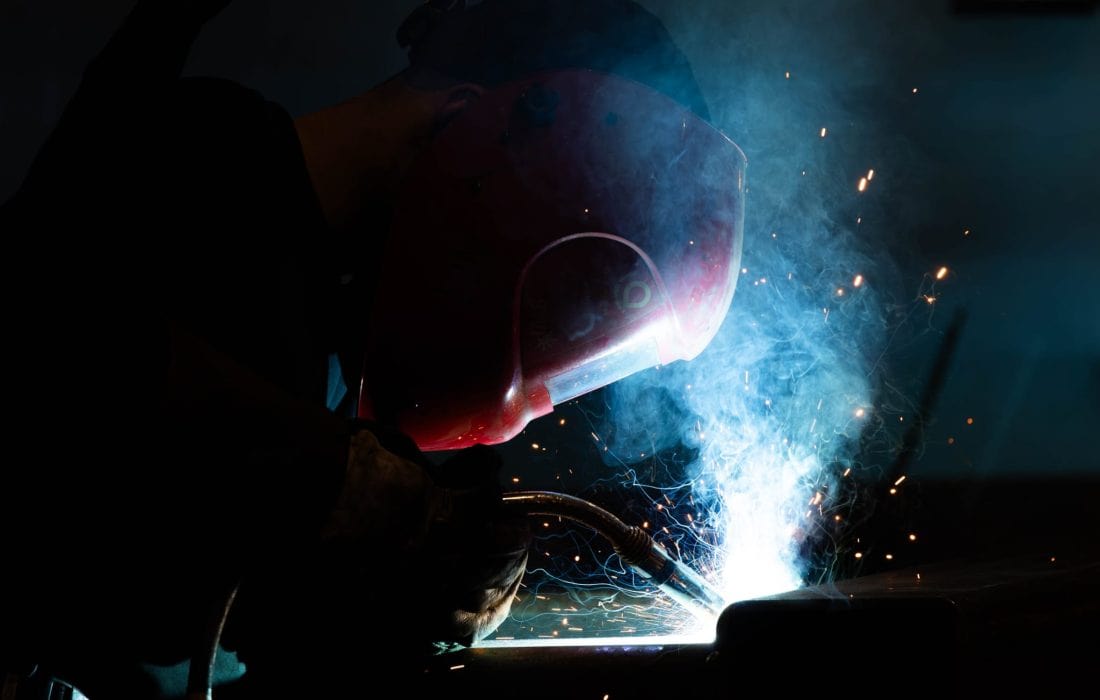
The North East has built for the North Sea for over fifty years. Oil and gas made the Tyne and the Tees what they are, and offshore wind is now doing the same again. If you’re buying steelwork for offshore or subsea work, you need a fabricator who can show you the paperwork as well as the welds.
This post covers what offshore and subsea buyers usually ask a fabricator for, and where MorFabrication fits. We’re an EN 1090 and ISO 3834-2 certified steel fabricator in Washington, Tyne and Wear, with coded welders, overhead cranes throughout the workshop, and the capacity to build fabrications up to 10 tonnes.
Why the North East, and why now
The region’s offshore supply chain is big and it’s growing. The North East Combined Authority’s June 2026 offshore wind report puts it at around 550 renewable energy companies employing roughly 17,000 people, and about a fifth of the UK offshore wind economy. Dogger Bank, the largest offshore wind farm in the world, and Sofia are both being built off our coast. In March 2026 the Crown Estate also announced plans to lease six gigawatts or more of new seabed off the North East.
The same report points out that many components are still made elsewhere and brought in. That’s an opening for local fabricators who can meet offshore quality requirements. Our workshop in Washington is under half an hour from the Port of Tyne and the Port of Sunderland, and within easy reach of Blyth and Teesport.
What offshore and subsea buyers look for in a fabricator
Offshore and subsea work is less forgiving than most onshore jobs. A weld that cracks in a car park gets fixed on a Tuesday. A weld that cracks on a subsea frame means a vessel, an ROV spread and a lot of money. So buyers want proof before anything gets cut.
Certified welding quality management
Offshore specifications nearly always call for a welding quality system to BS EN ISO 3834. We hold BS EN ISO 3834-2:2021 (comprehensive quality requirements), alongside BS EN 1090-1 Factory Production Control to EXC2 and ISO 9001:2015. All are issued by SCCS (UKAS Notified Body 2273), and you can check the certificate numbers on our accreditations page.
Coded welders and qualified procedures
This is the one buyers ask about first. Our welders are coded to BS EN ISO 9606-1 (steels) and BS EN ISO 9606-4 (nickel and nickel alloys), and we weld to procedures qualified to BS EN ISO 15614-1, with WPQRs on file. Our certified welding processes are 135 (MAG, solid wire), 136 (flux-cored) and 138 (metal-cored), on base materials up to and including S690 high-strength steel. A responsible welding coordinator oversees welding on site.
That means you can ask for the WPS, WPQR and welder certificates for your job, and you’ll get them.
Material traceability
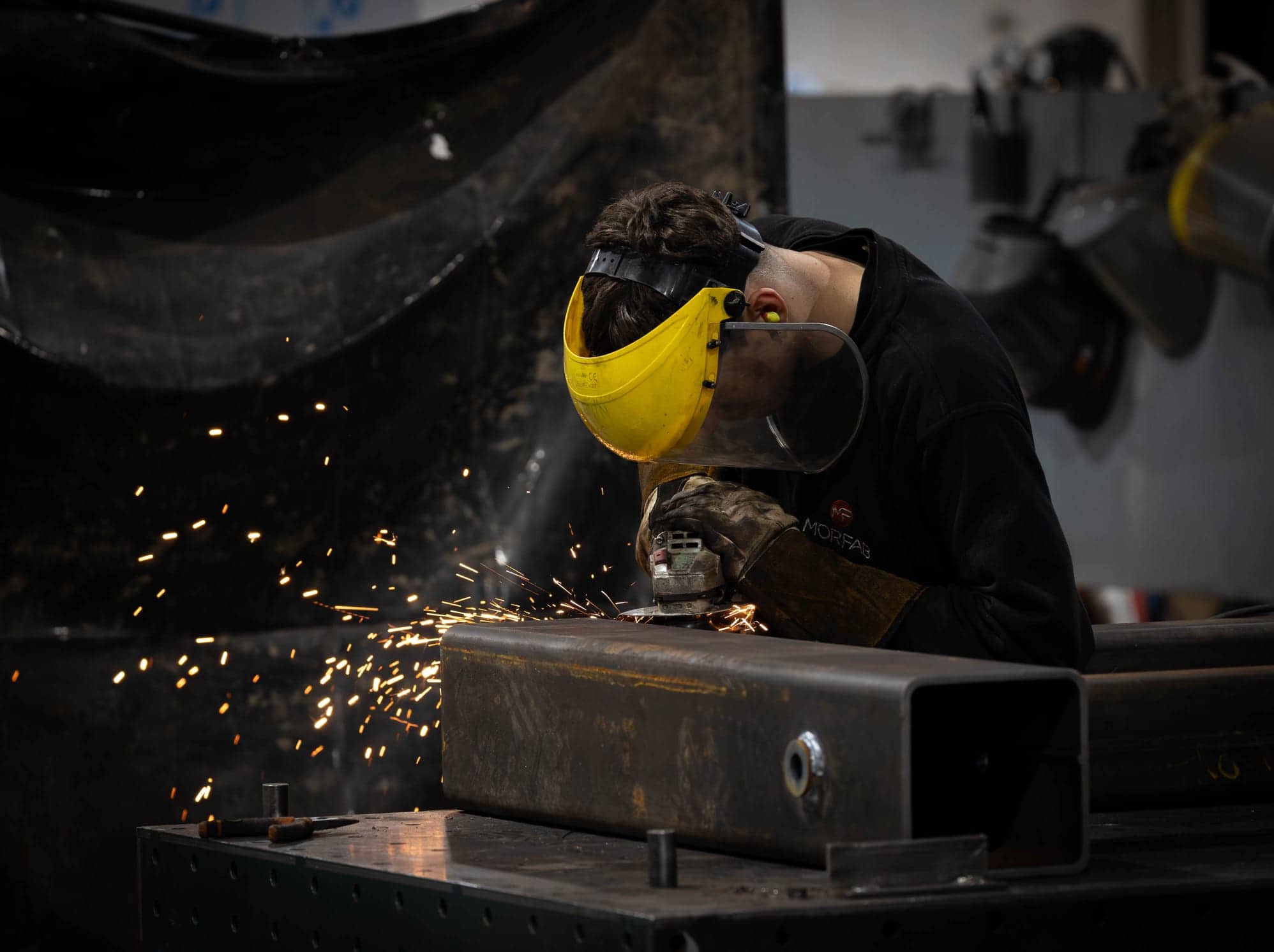
Every plate and section we use comes with mill certificates, and we keep traceable batch records for steel, stainless and welding consumables. On offshore work that usually means EN 10204 3.1 inspection certificates, with heat numbers carried through to the finished part. We can build that into a manufacturing data book for handover, so your QA team gets everything in one place.
Inspection and NDT
We inspect welds visually to BS EN ISO 5817:2023, and arrange NDT (MPI, ultrasonic and so on) through accredited third-party inspectors when your specification calls for it. Dimensional checks, inspection and test plans and client or third-party witness points can all be agreed up front.
Lifting capacity in the workshop
Skids, frames and subsea structures get heavy quickly. We have overhead cranes throughout the workshop, so fabrications up to 10 tonnes can be built, turned and loaded out under cover without waiting on mobile plant. Having cranes in every bay also means a big job can be welded in the best position, which helps weld quality as much as speed.
Offshore and subsea fabrications we can make
Every project is different, but this is the kind of work that suits our shop:
- Equipment skids, base frames and module frames
- Subsea frames, protection structures and support steelwork
- ROV tooling frames, brackets and baskets
- Secondary steelwork: platforms, walkways, handrails, ladders and access steel
- Cable management and pipe support steelwork
- Stainless steel fabrications for corrosive environments (see our stainless steel fabrication service)
- Port-side and quayside steelwork for offshore wind marshalling and operations
We’ll be straight with you about scope. Our EN 1090 certification covers execution class EXC2. That suits a large share of skids, frames, secondary steel and onshore support structures. If your drawings call for EXC3 or EXC4 primary structure, or an offshore-specific code like NORSOK M-101, tell us at enquiry stage and we’ll say honestly whether it’s a fit.
Corrosion protection
Offshore coating is usually specified by the client, often to NORSOK M-501 or ISO 12944 in the C5 or CX category, and is often a multi-coat liquid system. We’ll fabricate with coating in mind: smooth welds, dressed edges, no traps for water. Then we can either prepare the steel for your coating contractor or co-ordinate the coating for you.
For onshore and quayside items, our in-house powder coating line has an 8-metre oven and coats to ISO 12944 and Qualicoat Class 2 specifications. That means fabrication and finishing under one roof, with no lorry to a separate coater in between.
Why work with MorFabrication
- Certified and audited: ISO 9001, BS EN 1090 EXC2 and BS EN ISO 3834-2, all UKAS-backed.
- Coded welders: BS EN ISO 9606-1 and 9606-4, welding to qualified BS EN ISO 15614-1 procedures.
- Heavy lifting: overhead cranes throughout, fabrications up to 10 tonnes.
- Full paperwork: 3.1 material certs, weld records and data books when you need them.
- Local: Washington, Tyne and Wear, close to the Tyne, Wear, Blyth and Tees ports.
- One shop: cutting, forming, welding and finishing in-house. See our structural steel fabrication and metal fabrication services.
Talk to us about your offshore or subsea project
If you’ve got drawings, a specification or just an early enquiry, send it over. We’ll tell you what we can do, which documents we’ll supply and how long it’ll take.
Call 0191 816 2718 or get in touch through our contact page.