
Structural steel is everywhere. Walk around any town and you’ll see it: the steel frames of office buildings, industrial warehouses, bridges, and residential extensions. Yet most people never think about how that steel gets from the mill to the finished structure. Understanding structural steel fabrication – what it is, how it’s done, and why it’s so effective – can help you make better decisions if you’re planning a construction project, whether commercial, industrial, or residential.
At MorFabrication, we specialise in structural steel fabrication for clients across the North East and beyond. Let’s walk through the complete process, explore the real benefits, and look at where structural steel shines as a building material.
What is Structural Steel Fabrication?
Structural steel fabrication is the process of transforming raw steel sections (beams, columns, channels, angles, and plates) into finished, engineered components that form the skeleton of a building or structure.
Unlike bolting together pre-made components, fabrication is about taking a designer’s vision and precision-engineering steel to exact specifications. This might involve cutting, profiling, forming, bending, drilling, and welding – all coordinated to create components that fit together perfectly on site.
It’s the difference between buying a flat-pack bookcase and having a furniture maker custom-build a piece exactly to your room dimensions.
The Structural Steel Fabrication Process
From concept to installation, here’s how we approach a structural steel project:
1. Design & Engineering
It starts with architects and structural engineers. They define the load requirements, spans, heights, and overall structure. Working from these design specifications, we produce detailed fabrication drawings showing every component, connection, and dimension.
This is where design engineering expertise matters. We work closely with designers to ensure fabrication is efficient and cost-effective, sometimes suggesting minor design refinements that don’t compromise the structure but simplify manufacturing.
2. Detailed Detailing
With master designs in hand, our detailing team creates shop drawings showing exactly how each piece will be fabricated and how it connects to other pieces. These drawings guide the manufacturing team and serve as a legal record of how the structure was built.
3. Material Selection and Procurement
We source structural steel sections – beams, columns, plates, etc. – to the exact grade and specification required. Grade S275 and S355 are most common in the UK. We verify material certs from suppliers, confirming composition and mechanical properties.
4. Cutting and Profiling
Raw steel sections are cut to length using saws, flame cutting, or plasma cutting depending on section size and accuracy requirements. For complex cuts or custom profiles, we use CNC machinery to ensure precision and repeatability.
This is particularly important for modern designs with angled cuts, web penetrations, or specialty connections.
5. Forming and Bending
Some projects require forming or bending steel – curved beams, tapered columns, or custom geometry. We have the equipment and expertise to bend or form sections while maintaining structural integrity and material properties.
6. Drilling and Preparation
Connection holes are drilled with precision. Surface preparation – grinding, cleaning, and in some cases shot blasting – removes mill scale and prepares surfaces for welding or coating.
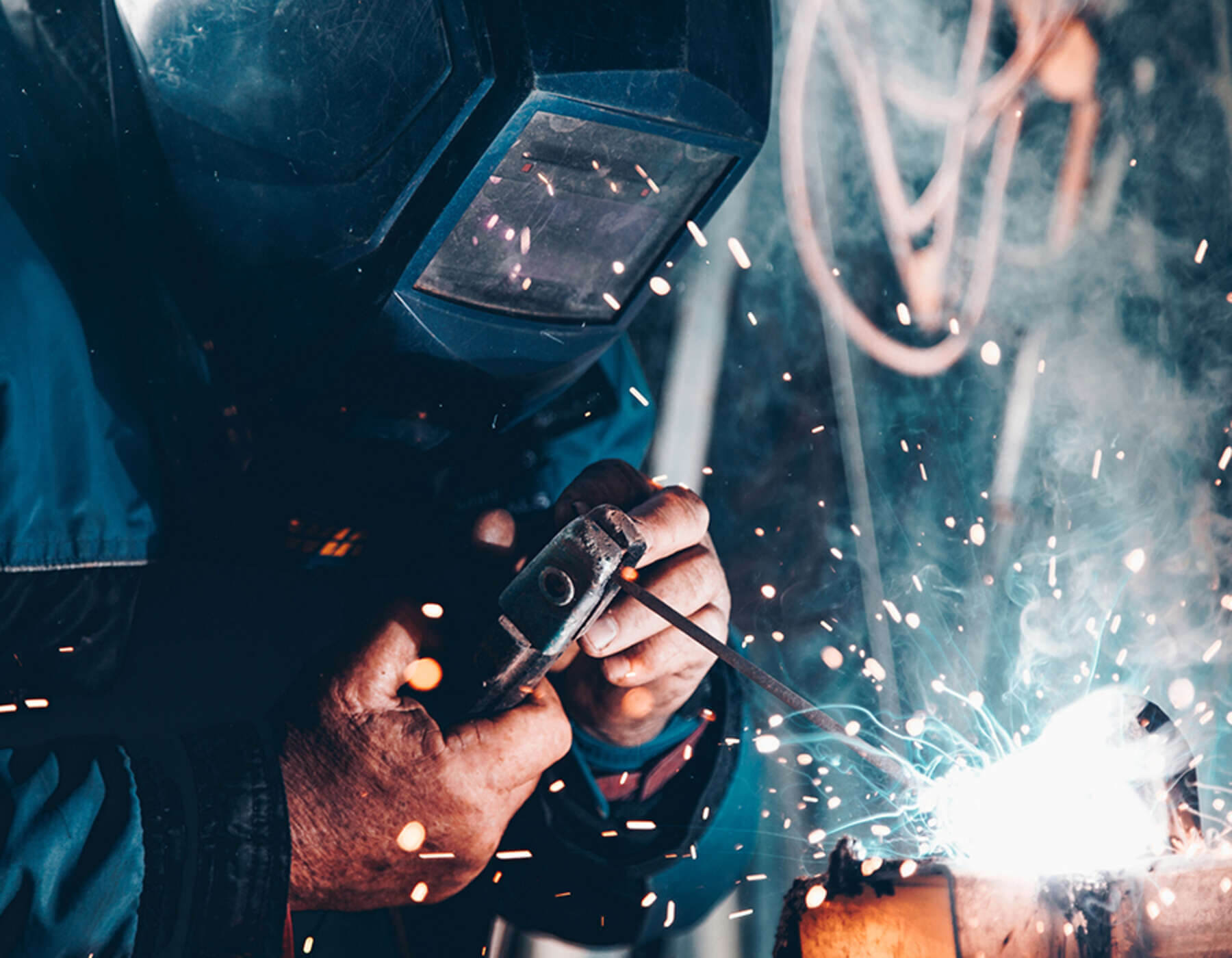
7. Welding and Assembly
Steel sections are welded together according to design specifications and engineering standards (BS EN 1090-1 and BS EN 1011-1). Our trained welders follow strict procedures controlling heat, cooling rates, and weld quality.
Welds are inspected visually and, where critical, using ultrasonic or radiographic testing to ensure integrity.
8. Finishing and Coating
Once structural assembly is complete, we apply protective coatings. This might be:
- Paint Systems – typically multi-coat primer and topcoat for atmospheric protection
- Galvanizing – hot-dip galvanizing for superior corrosion resistance in harsh environments
- Powder Coating – where aesthetic finish and long-term durability are priorities
We work to your project’s specific requirements and environmental conditions.
9. Quality Assurance
Every fabricated component is inspected against design specifications. Dimensions are verified, welds are checked, and finished items are documented.
10. Delivery and Installation
We manage logistics, ensuring components arrive on site ready for assembly. We can oversee installation and provide site support, or work with your contractors to ensure smooth handover.
Key Benefits of Structural Steel
Why has structural steel become the material of choice for so many projects? There are several compelling reasons.
Strength-to-Weight Ratio – Steel has exceptional strength relative to its weight. This means smaller, lighter sections can span longer distances than concrete, timber, or other materials. This translates to more usable floor space and lower material costs.
Speed of Construction – Components are pre-fabricated off-site and bolted or welded together on site. This is dramatically faster than pouring and curing concrete or other on-site construction methods. This speed reduces overall project timelines and associated costs.
Design Flexibility – Structural steel allows architects freedom to design cantilevers, long spans, complex geometries, and feature elements that would be difficult or impossible with other materials. Modern steel design is limited only by imagination.
Reliability and Predictability – Steel properties are well-understood, and fabrication processes are highly controlled. You get consistency and predictability in performance and timelines.
Sustainability – Steel is infinitely recyclable. At end of building life, structural steel can be recovered, melted down, and reused. This circular approach to material use appeals to environmentally conscious clients.
Reusability – Steel structures can be disassembled and relocated if needs change, something impossible with concrete or masonry.
Economic Efficiency – While initial material cost might be higher than some alternatives, the speed of construction, reduced on-site labour, and long service life make steel economical over the building’s lifetime.
Common Structural Steel Applications
Commercial Buildings – Office blocks, retail centres, and business parks typically use steel frames. The long spans and flexibility allow open floor plates optimised for modern office fit-out.
Industrial Units and Warehouses – Factories, distribution centres, and warehouses benefit from steel’s ability to span wide areas, accommodate heavy plant and machinery, and adapt to production needs.
Bridges and Pedestrian Overpasses – Steel’s strength and reliability make it ideal for bridge construction, from small footbridges to major road bridges.
Mezzanines and Multi-Level Structures – Adding intermediate levels to existing buildings often uses structural steel frames bolted into the existing structure.
Residential Extensions and Renovations – Structural steel beams allow removal of internal walls or creation of open-plan spaces in homes. A single large steel beam can replace multiple timber joists or block walls.
Specialty Structures – Canopies, stadiums, hangars, and custom architectural features are often most effectively realised in steel.
Why Choose an In-House Fabricator?
When you work with a company that handles design, fabrication, and finishing under one roof – like MorFabrication – you gain significant advantages:
- Seamless Communication – No coordination between separate suppliers and subcontractors; you work with one trusted partner
- Quality Control – We oversee every step, from initial design through final inspection
- Cost Efficiency – We can optimise fabrication processes, suggest design refinements, and eliminate waste
- Accountability – A single point of responsibility for the entire project
- Faster Delivery – We control the entire schedule without relying on external suppliers
- On-Site Support – Our team understands every aspect of your structure and can provide installation support
From Initial Concept to Handover
Our structural steel fabrication service covers:
- Structural steel fabrication – detailed design through manufacturing
- Design engineering – working with architects and engineers to optimise designs
- CNC profiling – precision cutting and profiling of complex geometries
- Finishing services – paint, galvanizing, and powder coating
- Powder coating – durable, aesthetic finishes for exposed steel
Ready to Start Your Project?
Whether you’re an architect, engineer, contractor, or building owner planning a structural steel project, we’d like to discuss how we can help.
Call us on 0191 8162718 or email info@morfabrication.com to discuss your requirements. Our team can review your design, provide cost estimates, and work out realistic fabrication and delivery schedules.
From commercial buildings to residential extensions, from bespoke installations to high-volume fabrication, we have the expertise and facilities to deliver quality structural steel solutions for projects across the North East and beyond.