
If you run a food or beverage manufacturing operation, you already know that hygiene isn’t a nice-to-have – it’s non-negotiable. Your equipment, processes, and materials all need to meet strict regulatory requirements while protecting your product and your reputation. Stainless steel conveyor systems play a critical role in making that possible.
At MorFabrication, we specialise in manufacturing food-grade stainless steel conveyor systems specifically designed for the unique demands of food and beverage production. Let’s explore why stainless steel matters, what makes a conveyor system truly food-safe, and how the right choice of equipment can transform your manufacturing efficiency.
Why Stainless Steel is Essential for Food Production
Stainless steel isn’t simply “nicer” than carbon steel for food processing – it’s fundamentally different in the ways that matter most.
Corrosion Resistance – Food production environments are harsh on equipment. You’re dealing with moisture, acidic products, salt content, and frequent washing and sanitisation. Carbon steel will rust and corrode under these conditions, creating pitting, micro-cracks, and surface irregularities where bacteria and contaminants can hide. Stainless steel, especially grades 304 and 316, resists this corrosion and maintains a smooth, non-porous surface.
Hygiene and Washdown Capability – Your conveyor system needs to withstand regular hot water, chemical cleaning agents, and sometimes high-pressure washdowns. Stainless steel can handle these conditions without degradation. The smooth surface and absence of rust and corrosion means there are fewer places for contaminants to lodge.
Contamination Prevention – Perhaps most critically, stainless steel prevents cross-contamination. Carbon steel tools, dust from grinding, or debris from other materials can embed in or transfer onto food contact surfaces. Stainless steel’s inert nature and dedicated processing prevents this risk.
Compliance and Regulatory Peace of Mind – Food safety standards like FSMA (Food Safety Modernization Act) and UK food hygiene regulations require careful material selection. Stainless steel demonstrates your commitment to food safety compliance and gives you documented evidence that your equipment meets regulatory standards.
Stainless Steel Grades: 304 vs. 316
You’ll often hear us refer to grades 304 and 316 stainless steel. What’s the difference?
Grade 304 is the most common stainless steel used in food processing equipment. It offers excellent corrosion resistance for most applications and is cost-effective. It’s ideal for dry storage areas, general food contact surfaces, and many conveyor applications.
Grade 316 includes molybdenum, which makes it even more resistant to corrosion, particularly from chlorides and in high-salt environments. It’s the choice for pharmaceutical applications, coastal environments, or where products contain salt or acidic ingredients. For seafood processing or brine applications, Grade 316 is typically essential.
The right choice depends on your specific product and environment. Our team can advise on which grade is optimal for your situation.
Conveyor Types Suited to Food Processing
Different food production tasks demand different conveyor configurations. Here’s what we typically recommend:
Wire-Belt Conveyors – These use parallel steel wires running over rollers, creating exceptional drainage. Perfect for applications where product moisture or liquid needs to drain away: wet vegetable washing, post-cook cooling, or any application involving water or brine. The open structure means nothing gets trapped underneath.
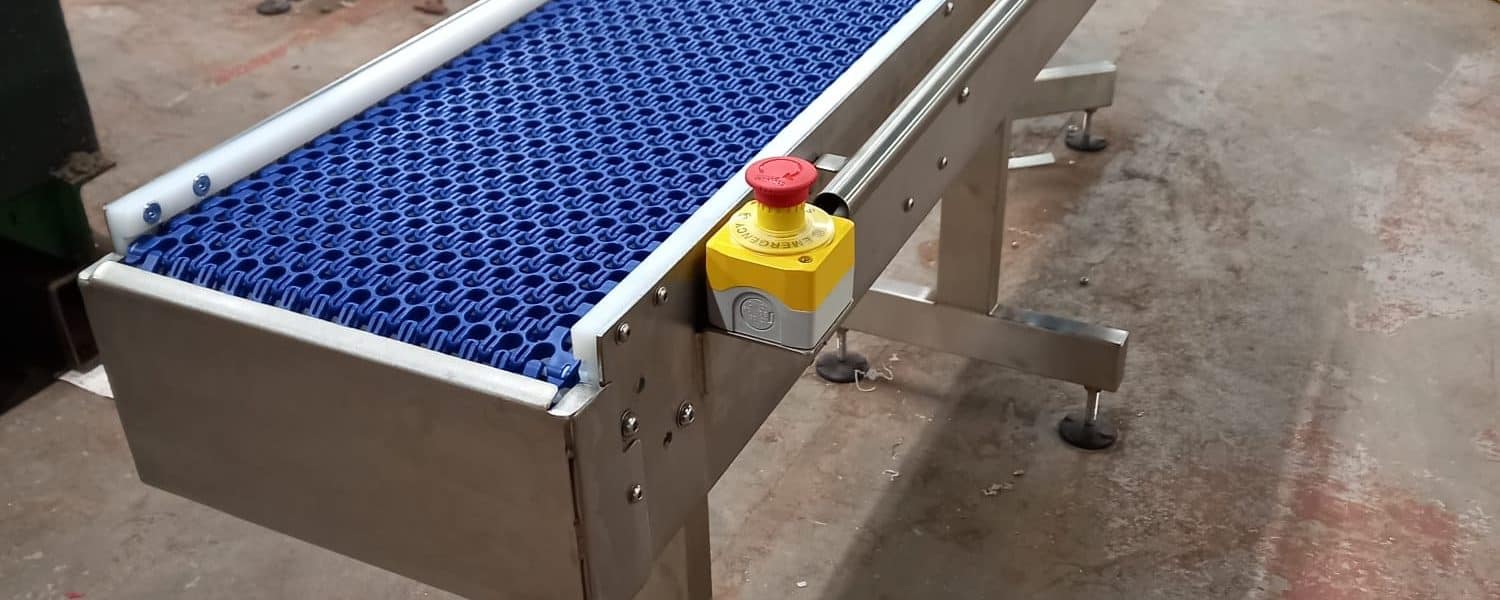
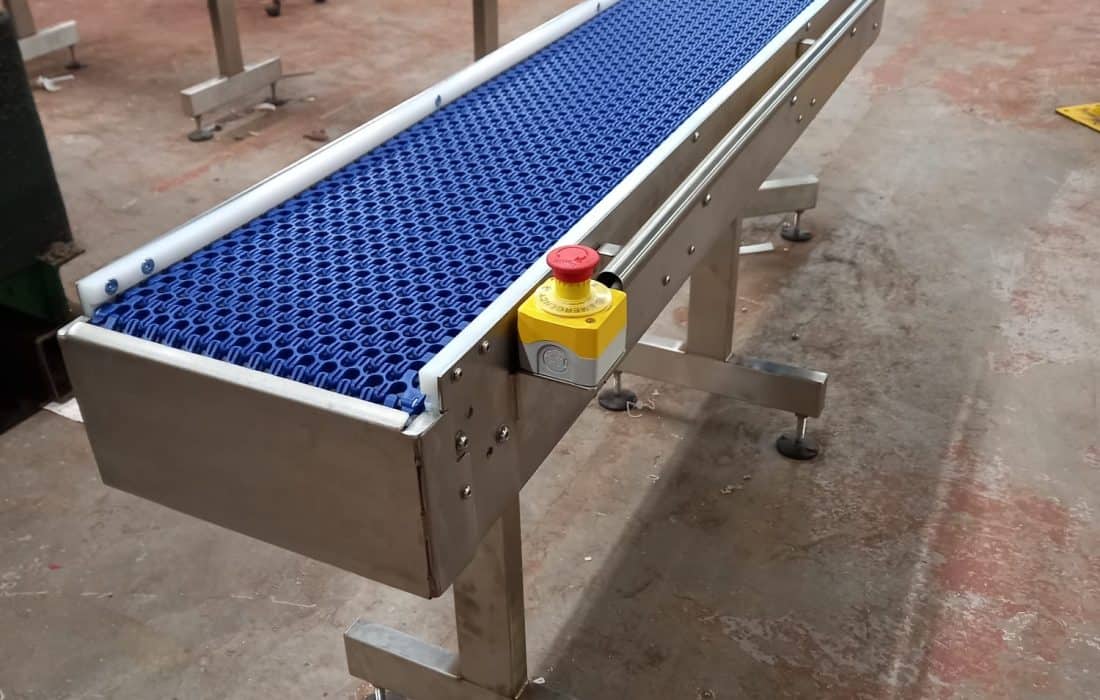
Modular Belt Conveyors – Plastic or elastomer modules attached to a stainless steel framework. Ideal where frequent cleaning and product residue management are essential. Easy to disassemble for thorough cleaning, and the modular design means if one section needs maintenance, you’re not shutting down the entire line.
Slat Chain Conveyors – For heavier products or where you need a more rigid, enclosed surface. Useful in bakeries, meat processing, or where you’re handling discrete product items rather than bulk material.
Incline/Decline Conveyors – Space-saving configurations that integrate multiple levels of your production line into a compact footprint.
Our conveyor specialists work with you to identify which configuration works best for your specific process.
Quality Assurance and Standards Compliance
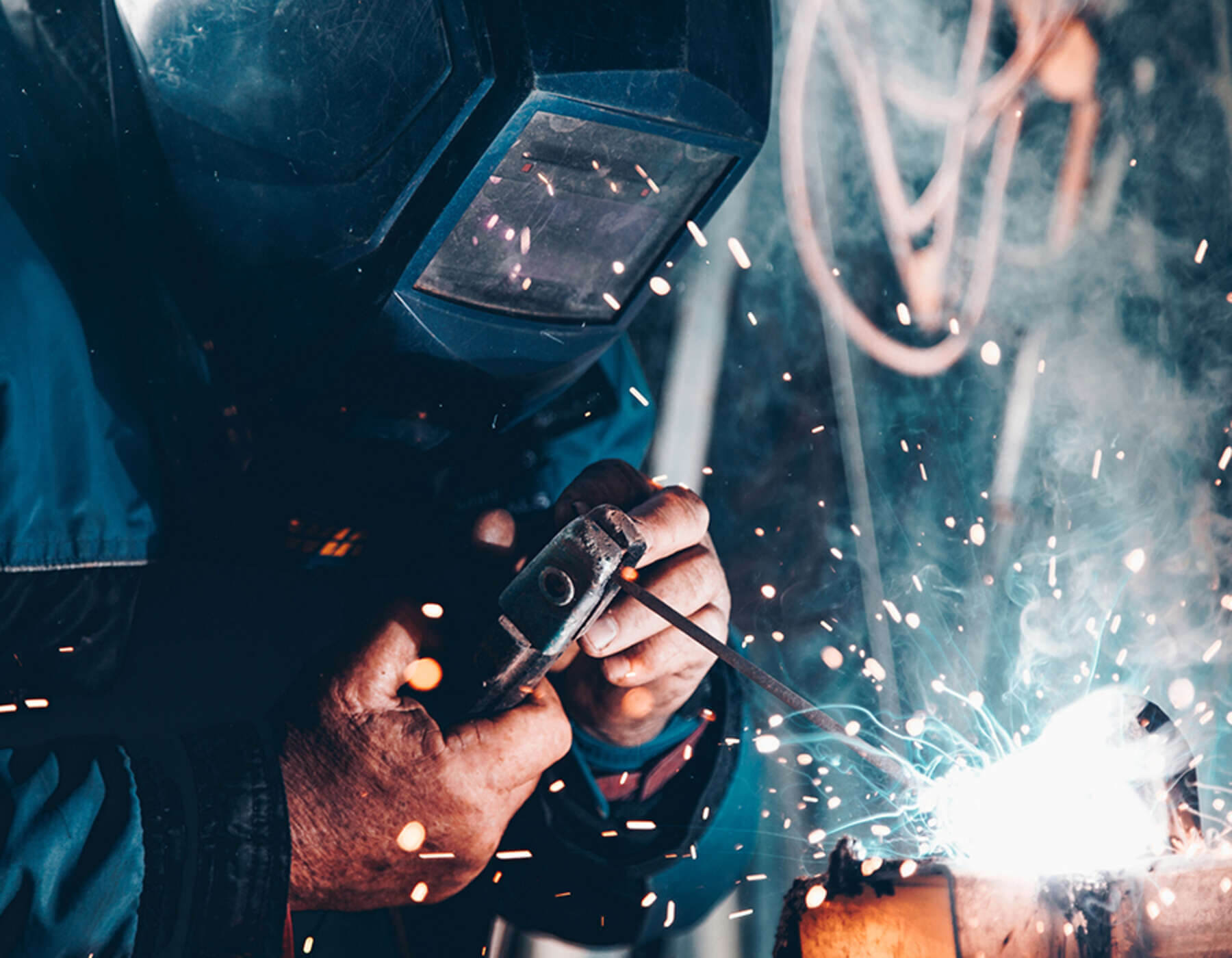
Manufacturing stainless steel conveyors for food use isn’t simply a matter of using stainless steel. How the equipment is fabricated, welded, finished, and handled throughout manufacturing profoundly impacts its food safety performance.
At MorFabrication, all our food-grade stainless conveyor systems are manufactured to:
- EN1090-2 – European standard for the execution of steel structures, ensuring consistent quality and safety standards
- EN1011-3 – Specific welding recommendations for stainless steel, preventing weld contamination and brittleness
- BSSA Standards – British Stainless Steel Association best practices for preventing contamination and maintaining stainless steel integrity
Critically, we operate a dedicated stainless steel manufacturing area with equipment specifically designated for stainless work only. We never use the same grinding equipment, cutting tools, or work surfaces for carbon steel and stainless steel. This prevents ferrous contamination – tiny particles of carbon steel or ferrous dust that can embed in stainless surfaces and cause rust, corrosion, and regulatory issues.
Real Benefits You’ll Experience
- Reduced Contamination Risk – Fewer recalls, regulatory issues, or product loss due to contamination
- Lower Maintenance Costs – Stainless steel requires far less maintenance than carbon steel equipment in food environments
- Extended Equipment Life – A properly made stainless conveyor will serve your facility for decades with minimal degradation
- Regulatory Confidence – Documented compliance with food safety standards and industry best practices
- Production Efficiency – Well-designed conveyor systems integrate seamlessly into your production flow, reducing bottlenecks and improving throughput
- Easier Cleaning – Less downtime for sanitation, thanks to smooth surfaces and open designs
From Design to Installation
We manage the complete journey. Our team will discuss your production challenges, design a conveyor system optimised for your specific product and process, manufacture it in our Newcastle facility to the highest standards, and oversee full installation and commissioning.
If you’re upgrading existing equipment or planning a new production line, stainless steel conveyor systems from MorFabrication offer the food safety confidence and operational efficiency you need.
Let’s Talk About Your Project
Whether you’re in dairy, bakery, meat processing, beverage production, or any other food & beverage sector, we’d like to discuss how a bespoke stainless steel conveyor system can improve your manufacturing efficiency and food safety compliance.
Call us on 0191 8162718 or email info@morfabrication.com to discuss your requirements. Our team can provide technical guidance, cost estimates, and realistic timescales.
You can also explore our other services including metal fabrication, finishing services, and design engineering.