
What Is CNC Profiling?
CNC profiling is a computer-controlled cutting process that uses specialised machinery to cut precise 2D or 3D shapes from metal stock. CNC stands for Computer Numerical Control—the machine reads instructions from a computer file and automatically moves the cutting tool along the programmed path, cutting the shape with remarkable accuracy.
Unlike manual cutting or traditional punch presses, CNC profiling is infinitely flexible. You can cut virtually any shape—circles, polygons, intricate artistic designs, or custom brackets—as long as you can draw it in CAD. Once the file is created, the machine can repeat that cut hundreds of times, identically, without setup changes or operator adjustments.
This flexibility and repeatability make CNC profiling perfect for modern fabrication, where jobs are increasingly bespoke and time-sensitive.
Types of CNC Profiling
Different CNC cutting technologies suit different materials, thicknesses, and applications. Here are the main ones you’ll encounter:
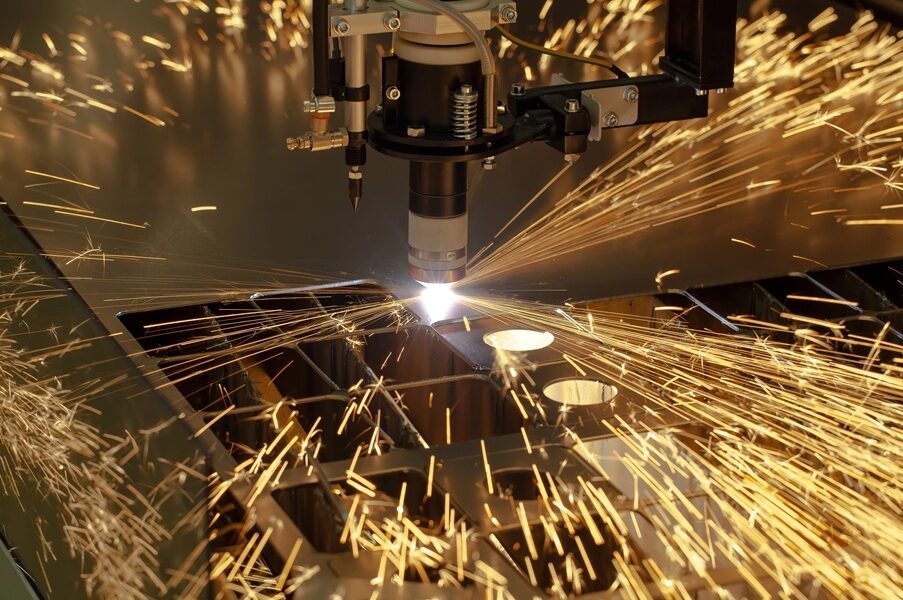
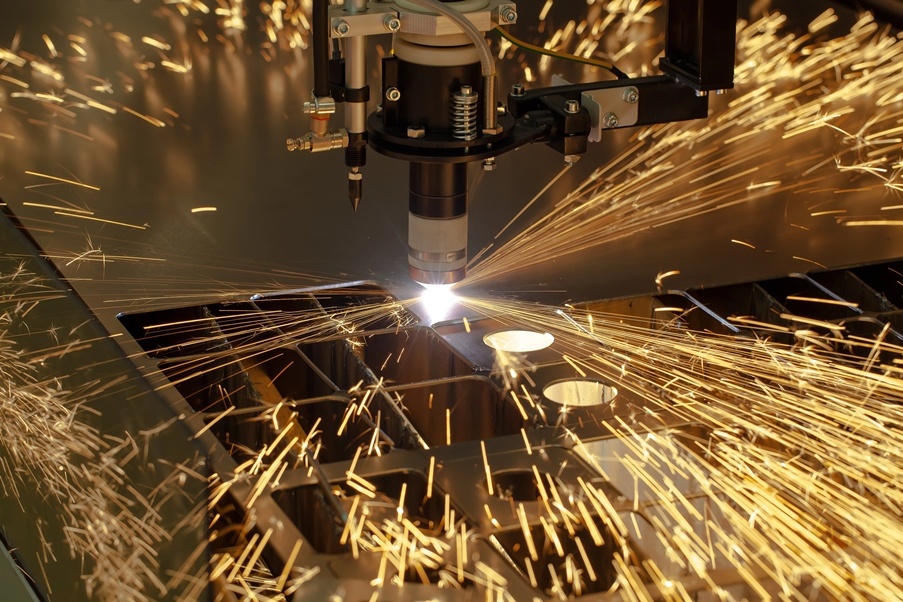
Plasma cutting uses a high-temperature plasma arc to melt metal. It’s fast, cost-effective, and works well on steel and stainless up to about 50mm thick. Modern CNC plasma systems cut with remarkable accuracy—hole tolerances of ±1mm are achievable. Plasma creates a heat-affected zone around the cut, which isn’t an issue for most applications, but may require finishing for high-precision work.
Laser cutting uses a focused laser beam to vaporise or melt metal (and other materials). Lasers produce the cleanest, most precise cuts—tolerances of ±0.1mm for thin material—and minimal heat distortion. Laser can cut stainless steel, mild steel, and aluminium up to about 20mm thick, and even thinner materials very rapidly. The downside is cost: laser systems are capital-intensive.
Oxy-fuel (oxy-acetylene) cutting is an older technology but still valuable for thick steel plates. It works by preheating the steel with a flame, then using a stream of oxygen to chemically burn away the metal. It’s slower than plasma but handles thick material (100mm+) economically. Oxy-fuel is less precise than plasma or laser, but fine for applications that don’t need tight tolerances.
At MorFabrication, we use modern CNC plasma and laser systems to serve everything from rapid prototyping to high-volume production runs.
The Benefits of CNC Profiling
Why invest in CNC profiling instead of simpler cutting methods? The benefits add up quickly:
Precision and repeatability. CNC profiling cuts identical shapes, cut after cut, without human error. If you need 100 brackets with perfectly positioned holes and edges, CNC guarantees consistency. This is especially valuable for assembly-critical components.
Reduced waste and scrap. CNC software nests shapes efficiently—packing multiple pieces on a sheet to minimise leftover material. For expensive materials like stainless steel, efficient nesting can save significant material cost. Less waste also means lower disposal costs.
Faster production. CNC cuts far faster than manual methods. A complex shape that might take an hour to cut by hand takes minutes on CNC. For low-to-medium-volume work, the speed often eliminates the need for expensive punch tooling.
Complex geometry. CNC can cut shapes that are impractical or impossible with traditional tools. Countersunk holes, angled cuts, intricate artistic designs, custom brackets—CNC handles them all without additional setup.
Cost-effectiveness. For one-offs and small runs (say, 1 to 500 pieces), CNC is usually cheaper than tooling up a press or punch. Even for larger runs, modern CNC is competitive. No expensive dies or tooling to amortise.
Design flexibility. Your design can evolve without triggering new tooling costs. If your customer changes the bracket design mid-project, you update the CAD file and cut the new version. Try that with a punch press.
Materials and Thickness Capabilities
CNC profiling works across a range of metals:
Mild steel is the most common—economical and easy to cut. Plasma and laser both handle it well. Typical range: up to 50mm for plasma, 20mm for laser.
Stainless steel requires CNC technology (plasma or laser especially—oxy-fuel creates oxidation). Stainless is tougher to cut than mild steel, so cut speeds are slower, but CNC handles it routinely. Useful for food industry, chemical, and architectural applications.
Aluminium cuts beautifully on laser—fast and clean. Plasma is less ideal for aluminium (higher oxygen consumption, more dross), but oxy-fuel doesn’t work at all. Aluminium is popular where weight-saving matters.
Other materials like copper, brass, and titanium can be profiled, but they’re less common and usually require specialist settings or slower speeds.
How CNC Profiling Integrates with Other Fabrication Processes
CNC profiling is rarely a standalone operation. It’s typically the first step in a larger fabrication workflow:
- Design and CAD. Your design is created in CAD and shared with the fabricator. At MorFabrication, our team reviews your design and optimises it for cutting if needed.
- CNC profiling. We cut your shapes from supplied stock or material we source for you.
- Secondary operations. Depending on your needs, profiled parts might then go through structural steel fabrication (welding, bolting, assembly), sheet metal fabrication (bending, forming), or other processes.
- Finishing. Finally, components are finished—powder coated, painted, or prepared for delivery.
For example, a customer recently asked us to create a bespoke industrial platform. We started by CNC profiling the steel grating panels to match the footprint of their existing building. The profiled grating was then integrated into a welded frame, and the whole assembly was powder coated. CNC profiling was the key to meeting their tight tolerances and fast timeline.
CNC Profiling for Your Next Project
Whether you need a single prototype, a batch of 50 components, or ongoing runs of a standard part, CNC profiling offers precision, speed, and cost-efficiency that’s hard to beat.
Common applications include:
- Brackets, supports, and mounting plates
- Grating and flooring panels
- Artistic or decorative metal panels
- Custom cladding and fascia
- Machine bases and frames
- Signage and architectural elements
- Prototype and bespoke components
Our team at MorFabrication in Washington, Tyne and Wear can help you design for CNC profiling, optimise your material use, and cut your components to the tolerances you need. We work with customers right across the North East, from one-off projects to serial production.
Ready to get profiling? Call us on 0191 8162718 or drop an email to info@morfabrication.com. Share your design files or your requirements, and we’ll give you a quote and timeline.
Learn more about our capabilities on our CNC profiling service page, or explore how we integrate profiling into wider metal fabrication and design engineering projects.